





 How teams ship with Capy
From task to merged PR
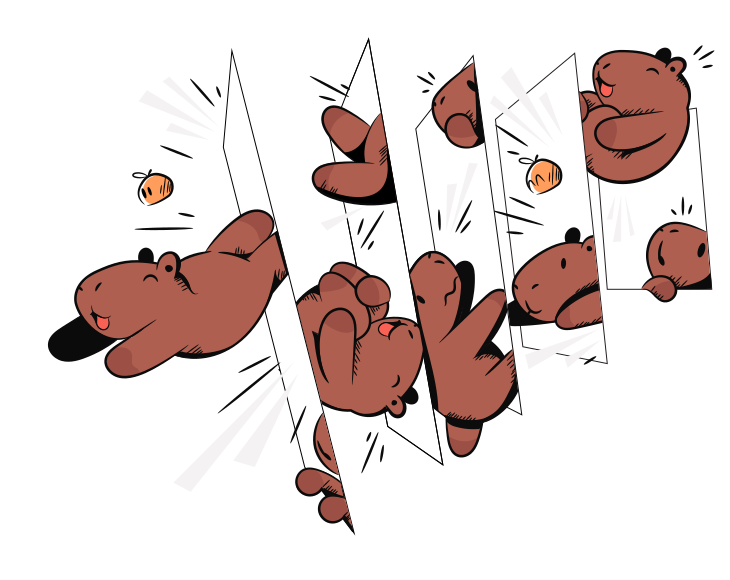
One agent per task, 25+ tasks in flight at once. You assign the work and review the PRs; the agents handle everything in between.
The daily loop
Assign a ticket in the morning, approve the PR in the afternoon — three moves carry the whole cycle.
Hand off the ticket
Point Capy at a GitHub issue or Linear ticket, or just describe the outcome. The agent explores the repo, implements, runs tests, and opens a PR that follows your conventions.
Run the sprint in parallel
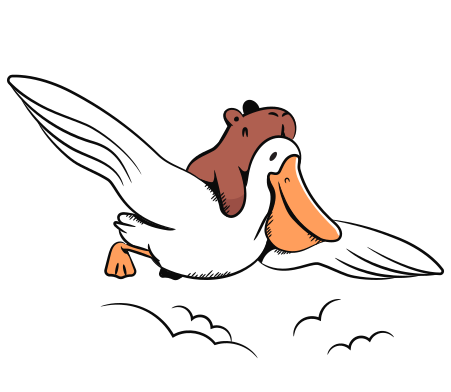
25+ agents work side by side while your team watches and steers in real time. Branch-aware coordination keeps parallel work from colliding.

Every PR reviewed
Bugs caught, test coverage verified, security issues flagged — the same thorough read on every PR. Review depth that doesn't depend on who's free that afternoon.
The work that never makes the sprint
Bug queues, stale docs, and postponed migrations — agents work them in the background while the roadmap moves.
Bug Triage & Fixes
Paste a stack trace or bug report. The agent traces it to root cause, ships the fix, and adds a regression test so it stays fixed.

Documentation
Code changes are detected, and the READMEs, API docs, and comments that describe them get updated to match — no stale-docs sweep required.
Refactoring & Migrations
Dependency upgrades, API migrations, and pattern refactors that span hundreds of files — split across parallel agents instead of a quarter of an engineer's year.
Why teams switch
Most AI coding tools stop at a suggested diff. Capy owns the loop end to end — and that changes what you can hand off.
- Task to merged PR, autonomously
- 25+ agents per repo, coordinated across branches
- Answers review feedback without pings
- Rebases, CI failures, and merge conflicts handled
- Reads issues, logs, and specs for context
- Backfills tests, docs, and missing coverage

FAQ
How autonomy, parallelism, and review actually work day to day.
How autonomous are Capy agents?
Fully autonomous end-to-end. Agents explore your codebase, write code, run tests, open PRs, and respond to review feedback — all without intervention. You supervise and guide when needed.
Can agents work on the same codebase simultaneously?
Yes. Capy agents coordinate across branches to avoid conflicts. You can run 25+ agents on different tasks in the same repo at the same time.
What size tasks can Capy handle?
From single-file bug fixes to multi-file refactors spanning hundreds of files. Agents work best when tasks are scoped to a clear outcome.
Do agents understand my codebase conventions?
Yes. Agents explore your repo before writing code — they follow your patterns, naming conventions, and project structure.
What happens if an agent makes a mistake?
Every change goes through a PR. You review and provide feedback like any other contributor. Agents iterate on review comments automatically.
Spin up an AI software engineer in minutes
Connect a repo, assign a task, and review the PR that comes back.